Who Gets Remembered? The Forgotten Women of Republican Chinese Art
Abstract
This essay examines why many women artists who actively participated in the development of modern Chinese art during the Republican period (1915–1949) have largely disappeared from historical memory. Rather than attributing their marginalization to a lack of talent or artistic achievement, it argues that the institutional formation of modern Chinese art played a decisive role in shaping historical recognition. Although women studied in leading academies, exhibited nationally and internationally, taught in universities, and contributed to the emergence of modern artistic practices, their careers unfolded within institutions that privileged male authority and professional networks. Through the cases of Pan Yuliang, Fang Junbi, Guan Zilan, and other Republican women artists, the essay demonstrates how museums, exhibitions, critics, publishers, and educational institutions collectively determined whose work entered the artistic canon. It further argues that historical exclusion resulted not from a single act of discrimination but from the cumulative effects of countless institutional decisions regarding collecting, publishing, teaching, and preservation. While recent scholarship has begun to recover these overlooked artists, the essay contends that genuine historical revision requires more than adding women back into existing narratives. Instead, it calls for a critical reexamination of the processes of canon formation and the institutional structures that shape cultural memory. Ultimately, the essay argues that recovering Republican women artists not only restores neglected individuals to history but also fundamentally reshapes our understanding of modern Chinese art.
Keywords
Republican China; Women artists; Modern Chinese art; Canon formation; Cultural memory; Gender; Art history; Museums; Institutional history; Pan Yuliang
Introduction
When the history of modern Chinese art is told, the same names are repeated: Xu Beihong, Lin Fengmian, Liu Haisu. Their paintings hang in museums, their careers fill the pages of art history textbooks, and their names are familiar to generations of Chinese readers. They are celebrated as the architects of China’s artistic modernity. Yet they share another characteristic: they are all men. This raises a question that is surprisingly rarely asked: Where are the women artists in this story? What became of the women who studied in the same academies, exhibited in the same national exhibitions, and helped shape the same artistic movement?
Today, many of their names have all but disappeared from public memory. In fact, between 1915 and 1949, during China’s Republican era, women entered art academies in unprecedented numbers. They studied in Paris and Tokyo, exhibited alongside leading male artists, taught in universities, published essays on art, and experimented with oil painting, modern portraiture, and new artistic styles. Some achieved national recognition during their own lifetimes (Judge, 2010). Yet today, many of their names have disappeared from textbooks, museum collections, and public memory.
In fact, museum function not merely as repositories of artworks but as institutions of cultural memory, determining which artists become visible to subsequent generations.Women artists’ absence is often explained as an inevitable consequence of history, as fewer women simply became artists. But the historical record tells a different story. Republican Chinese women artists were not forgotten because they lacked talent or ambition. Rather, they were gradually marginalized through the institutional formation of modern Chinese art itself. As academies, exhibitions, professional organizations, critics, museums, and publishers established the foundations of China’s modern art world, they also shaped who would be remembered as central to that history. Artistic achievement alone was never enough. Recognition depended on institutions, and institutions decided whose stories survived.
Understanding why these women disappeared requires looking beyond individual biographies and examining the systems that produced artistic legitimacy.
Women Building Modern Chinese Art
The first half of the twentieth century was one of the most transformative periods in Chinese cultural history. Political upheaval, intellectual reform, and increasing contact with Europe and Japan fundamentally reshaped artistic practice. The New Culture Movement encouraged science, democracy, and educational reform while challenging traditional social hierarchies (Furth, 1983). For women, these reforms opened opportunities that had been nearly unimaginable only decades earlier.
Modern art academies were established in cities such as Shanghai, Beijing, and Hangzhou. Students traveled abroad to study academic painting in Paris or Tokyo before returning home with new techniques and new ideas about professional art. National exhibitions, commercial galleries, illustrated magazines, and artistic societies emerged rapidly, creating an entirely new ecosystem for artists.
For the first time, becoming an artist increasingly meant participating in institutions rather than simply mastering a craft. Women entered these institutions in growing numbers. They enrolled in prestigious academies, studied overseas, and participated in national exhibitions. Artists such as Pan Yuliang developed expressive oil paintings that blended European modernism with Chinese artistic traditions. Fang Junbi exhibited internationally after studying in France. Guan Zilan became one of China’s earliest practitioners of Fauvism, introducing vibrant color palettes rarely seen in Chinese painting at the time. Others, including Qiu Ti and Tang Yunyu, built professional careers through teaching, exhibiting, and publishing.
By almost every measurable standard, women were active participants in the making of modern Chinese art. Yet participation did not guarantee historical visibility.
One of the most striking examples is Pan Yuliang.
Today, she is often remembered as one of the few Republican-era women artists whose name survived the passage of time. Yet even her story reveals how extraordinarily difficult it was for a woman to become an artist in early twentieth-century China.
Born into poverty and orphaned at a young age, Pan was sold into a brothel as a teenager before eventually escaping with the help of a customs official who later became her husband. Against overwhelming social expectations, she learned to paint, enrolled at the Shanghai Art Academy, won government sponsorship to study in France and Italy, and developed into one of China’s most accomplished modern painters (Zegeer, n.d).
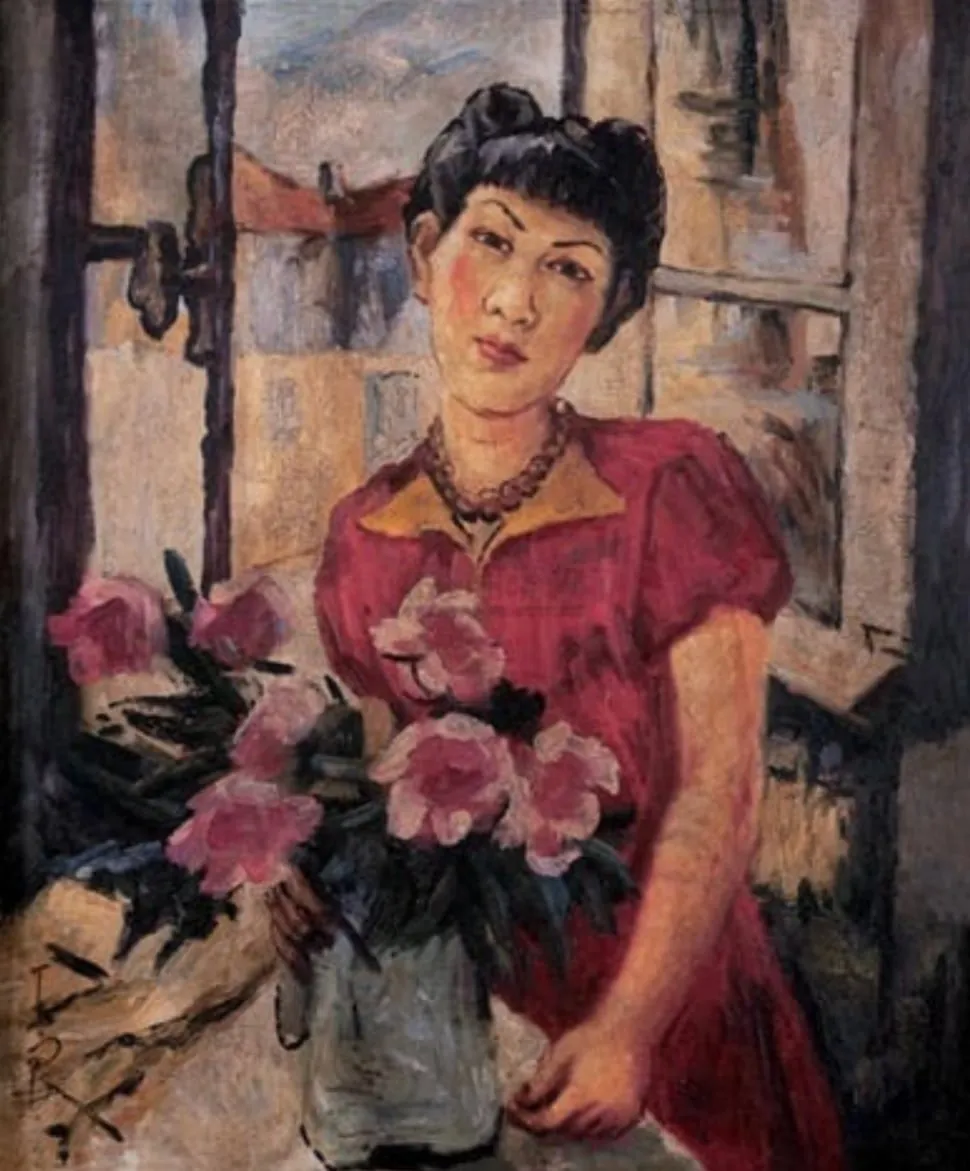
Her life is frequently celebrated as an inspirational story of perseverance. But it also raises an uncomfortable question: Why did a woman have to overcome such extraordinary hardship simply to earn a place in the history of Chinese art?
Pan Yuliang was not alone. Many Republican women artists faced barriers that extended far beyond artistic training. They struggled against expectations surrounding marriage and domestic life, unequal access to professional networks, financial insecurity, and persistent skepticism toward women’s participation in public cultural life. Their male contemporaries certainly encountered political upheaval and personal challenges, but they generally entered an art world whose institutions, leadership, and critical discourse had already been built around male authority.
This distinction is significant because it demonstrates that recognition within the history of modern Chinese art was not simply a meritocratic outcome based on artistic achievement. Rather, it was shaped by unequal social and institutional conditions that placed disproportionately higher demands on women artists. To achieve comparable levels of professional visibility, women often had to overcome barriers that extended well beyond artistic practice, including restricted educational opportunities, gendered expectations regarding domestic responsibilities, unequal access to patronage and professional networks, and persistent skepticism toward women’s artistic ambitions. Their careers therefore required a degree of resilience that was itself structurally conditioned by gender inequality. However, even exceptional perseverance and artistic accomplishment were insufficient to secure a lasting place within the historical canon. Because the institutions responsible for canon formation privileged male artists and their professional networks, many accomplished women were gradually excluded from narratives of modern Chinese art. Their absence from art history thus reflects not a lack of talent or contribution, but the gendered mechanisms through which artistic value, authority, and historical memory were constructed.
The Invisible Architecture of Recognition
When historians explain the absence of women artists, they often focus on cultural prejudice or individual discrimination. Those factors certainly mattered. However, they cannot fully explain why many women who enjoyed successful careers during the Republican era later disappeared from the historical narrative.
The answer lies in institutions. Art history is often imagined as a neutral record of exceptional works, but it is more accurately understood as a record of institutional choices. Museums decide which paintings to acquire and display. Universities determine which artists appear in survey courses. Publishers select whose biographies are printed. Critics influence reputations through reviews and essays. Exhibition organizers decide who receives visibility. Together, these decisions gradually shape what future generations recognize as artistic history.
This process is known by art historians as canon formation, the construction of a group of artists considered representative of an artistic tradition (Hoover, 198). A canon may appear natural, but it is produced through decades of collecting, publishing, teaching, and curating.
Republican women artists participated in many of the same institutions as their male contemporaries, yet they often occupied more precarious positions within them. Exhibition opportunities were fewer. Leadership positions in artistic societies remained overwhelmingly male. Critics frequently discussed women artists through their gender rather than their artistic innovation. Reviews praised their elegance or femininity while overlooking technical experimentation that received admiration when practiced by male painters.
Even overseas education, which opened extraordinary opportunities for women, did not guarantee equal professional recognition after they returned to China. Their international experience expanded artistic possibilities but could not overcome institutional structures that increasingly defined artistic authority through predominantly male networks (Andrews, 1994). These inequalities accumulated quietly. No single exhibition erased women from history. No single museum deliberately excluded every female artist. Instead, countless small decisions, what to collect, whom to publish, which artists to teach, whose work to reproduce in textbooks, gradually transformed unequal visibility into historical absence.
By the time post-1949 histories of modern Chinese art were written, the canon had already begun to solidify (Andrews & Shen, 2012). Later generations inherited not only paintings but also an institutional narrative that identified a relatively small group of male artists as the principal architects of Chinese modernity. Women who had once exhibited beside them became footnotes, exceptions, or disappeared altogether.
Beyond Recovery: Rethinking Modern Chinese Art
In recent decades, museums and scholars have begun to recover the stories of Republican women artists. Retrospectives of Pan Yuliang have attracted renewed public attention. Exhibitions featuring Fang Junbi (see figure 2), Guan Zilan (see figure 3), and other women painters have gradually expanded scholarly understanding of their contributions. A growing body of research has challenged the long-held assumption that women occupied only a marginal position in the development of modern Chinese art.
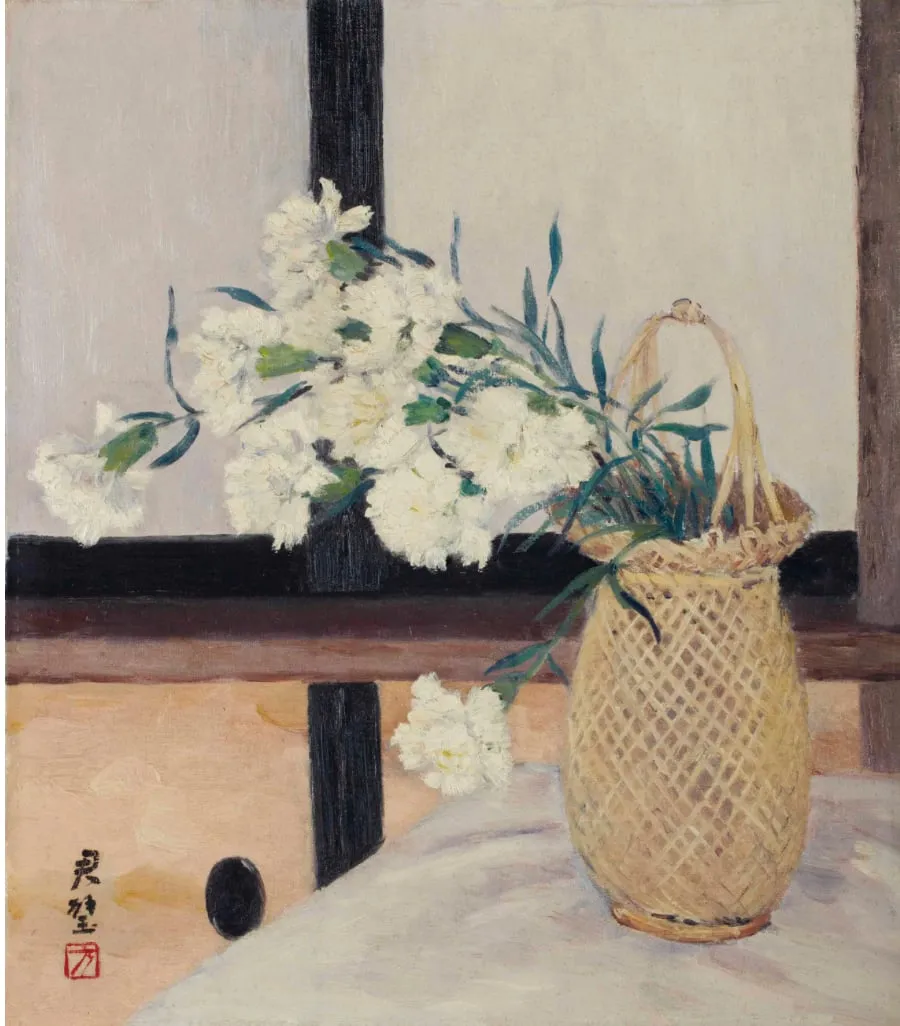
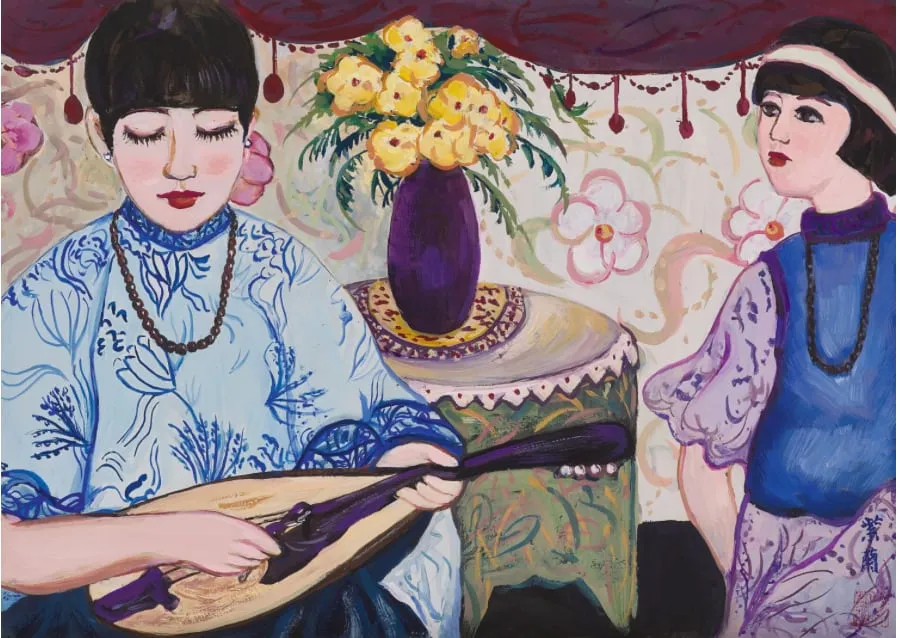
Yet simply rediscovering forgotten artists is not enough. If we merely add a handful of women back into an existing narrative, we risk treating their absence as an unfortunate oversight rather than asking why the narrative took this shape in the first place. The larger question is not why a few women disappeared.
It is how modern Chinese art history itself was constructed. Who decided which artists represented the nation? Who determined what counted as innovation? Whose works entered museum collections? Whose names appeared in textbooks? And whose contributions quietly faded from public memory? The answers are rarely found in a single exhibition, a single critic, or a single institution. Instead, they lie in thousands of decisions made over decades, decisions about collecting, publishing, teaching, exhibiting, and preserving. Individually, these choices may seem insignificant. Collectively, they determine what later generations come to accept as history.
This process is what art historians describe as canon formation: the gradual construction of a body of artists regarded as representative of an artistic tradition. A canon is often mistaken for an objective record of artistic excellence. In reality, it reflects the priorities, values, and power structures of the institutions that created it.
Conclusion
Republican women artists participated in exhibitions, academies, and artistic societies. Yet participation did not necessarily translate into authority. The power to define artistic innovation, determine professional standards, and narrate the history of modern Chinese art remained concentrated within predominantly male institutions.
Republican women artists remind us that history is not simply written by those who produced great work. It is also written by those who possessed the authority to decide what deserved to be remembered. Recognizing this does more than restore overlooked women to the historical record. It changes the way we understand modern Chinese art itself. These women were never absent from the making of China’s artistic modernity. They studied in the same academies, exhibited in the same national exhibitions, debated the same artistic questions, and experimented with the same modern ideas as their male contemporaries. They helped build the institutions that defined modern Chinese art, even if those institutions later failed to remember them.
In fact, similar patterns have been identified in European art history, where women trained alongside male artists yet were systematically marginalized within museum collections and art historical narratives (Nochlin, 1971). The Republican Chinese case therefore reflects not only local patriarchal structures but also broader processes through which modern art canons were constructed internationally.
Perhaps, then, the most important question is no longer “Where were the women?” but “Who has authority to decide what counts as modern Chinese art in the first place?”
Until we answer that question, the history of modern Chinese art remains incomplete. Recovering Republican women artists is not simply an act of correcting historical omission. It is an invitation to rethink how artistic history is written, how cultural memory is constructed, and ultimately, who gets remembered.
References
Andrews, J. F., & Shen, K. (2012). The art of modern China. University of California Press.
Aware: Archives of Women Artists, Research and Exhibitions. (n.d.). Fang Junbi (Fan Tchun Pi). https://awarewomenartists.com/en/artiste/fang-junbi-fan-tchun-pi/
Aware: Archives of Women Artists, Research and Exhibitions. (n.d.). Guan Zilan (Violet Kwan). https://awarewomenartists.com/en/artiste/guan-zilan-violet-kwan/
Furth, C. (1983). Intellectual change: From the Reform movement to the May Fourth movement, 1895–1920. In J. K. Fairbank (Ed.), The Cambridge history of China (Vol. 12, Republican China 1912–1949, Part 1, pp. 322–405). Cambridge University Press.
Hoover, R. W. (n.d.). How the canon was formed. Retrieved July 8, 2026, from https://fiveable.me/introduction-to-literary-theory/key-terms/canon-formation
Judge, J. (2008). The precious raft of history: The past, the West, and the woman question in China. Stanford University Press.
Pan Yuliang Research Project. (n.d.). The art of Pan Yuliang. Retrieved July 8, 2026, from https://sites.google.com/view/theartofpanyuliang/home
Andrews, J. F. (1994). Painters and politics in the People’s Republic of China, 1949–1979. University of California Press.
Nochlin, L. (1971). Why have there been no great women artists? ARTnews, 69(9), 22–39, 67–71.