Can a Change of Place Change the Way Artists Create?
Abstract
This essay examines how changes in place influence artistic creativity by arguing that relocation does more than provide new subject matter; it reshapes the conditions through which artistic perception and creative thinking develop. Drawing on theories of place, including Relph’s concept of place and Tuan’s notion of topophilia, the essay explores how environments function as active participants in the creative process rather than passive settings. Historical case studies of Vincent van Gogh, Claude Monet, and Paul Gauguin demonstrate how relocation transformed artistic techniques, visual language, and conceptual approaches. The discussion further considers contemporary artist residency programs as institutionalized forms of creative relocation, highlighting their role in fostering cultural exchange, cognitive flexibility, and reflective practice. At the same time, the essay acknowledges the limitations of environmental determinism by examining artists such as Georgia O’Keeffe, whose work demonstrates that profound artistic achievement can also emerge through sustained engagement with a single place. Ultimately, the essay argues that while changing place can stimulate creativity by altering perception and encouraging new ways of seeing, artistic excellence depends on the dynamic relationship between the individual and the environment rather than geographical movement alone.
Keywords
Artistic creativity; Place; Artist residency; Relocation; Creative process; Environmental perception; Topophilia; Cognitive flexibility; Cultural exchange; Artistic perception
Introduction
Traditional discussions of artistic inspiration often focus on the individual artist’s talent or imagination. However, when we travel, the homes, studios, or former residences of famous artists and writers are often among the most popular destinations. Today, artist residency programs around the world continue this tradition, making temporary relocation an established and widely accepted part of artistic practice. Changing one’s environment has become so common that it is often viewed as an essential stage in an artist’s development.
People generally assume that artists move to new places simply to find different landscapes, new subjects, or fresh inspiration. However, the influence of place on artistic creation extends far beyond providing new visual material. A new environment not only changes what artists see, but also transforms how they observe, think, and ultimately create. This raises an important question: what is the relationship between place and creativity? Place is far more than a physical location. It encompasses social relationships, cultural memory, historical experience, and emotional attachment. The relationship between artists and their surroundings is therefore not one between a passive observer and an object being observed; rather, it is a continuous process of interaction in which both the artist and the environment shape one another. The unique atmosphere, culture, and everyday life of a place can profoundly influence an artist’s perception and creative process. For example, Ernest Hemingway’s time in Cuba, particularly its coastal landscape and maritime culture, played a significant role in the writing of The Old Man and the Sea. When artists immerse themselves in unfamiliar environments, they encounter not only new visual experiences but also different ways of living, new social relationships, and diverse cultural perspectives, all of which can shape the way they create.
In this essay, I shall argue that rather than simply providing artists with new subjects to depict, changing place restructures the conditions under which artistic perception is formed. New environments alter habits of seeing, expose artists to unfamiliar social and cultural systems, and create the psychological distance necessary for creative reflection. Yet place itself does not determine artistic excellence; rather, creativity emerges through the dynamic relationship between artists and the environments they inhabit.
Location Does More Than Inspire: It Participates in Artistic Creation
The relationship between place and artistic creation extends beyond the idea that a location can potentially influence creativity. Rather, place can have a direct and active role in shaping the creative process itself. Increasingly, scholars argue that creativity is not produced solely by individual talent or imagination but emerges through continuous interaction between people and their environments. In this view, artists and places are interdependent, each contributing to the formation of creative expression.
Geographer Edward Relph (1976) argues that people’s experiences of place shape the way they understand and interpret the world. Building on this idea, the term topophilia, originally coined by the poet W. H. Auden and later popularized by geographer Yi-Fu Tuan (1974), describes the deep emotional bonds that individuals develop with particular places. Tuan (1977) argues that places are not merely physical locations; they are shaped by memories, cultural traditions, social relationships, and lived experiences. Together, these theories suggest that place functions as a complex cultural and emotional environment rather than simply a geographical setting.
Not all scholars attribute artistic development primarily to place. Formalist approaches, for instance, emphasize individual technique, artistic training, or stylistic innovation rather than environmental influence (Gombrich 2000). From this perspective, relocation alone cannot explain artistic transformation. Instead, place should be understood as one factor operating alongside education, personal experience, and historical circumstance.
From another perspective, if one’s homeland shapes artistic identity, then leaving home can become equally significant in the creative process (Bhahba 2004). Physical distance often encourages artists to reconsider their own culture from a new perspective. The experience of displacement, migration, or living abroad allows familiar traditions to be viewed with greater reflection and critical distance. For example, the Japanese writer Yoshii Shinobu, who writes in Chinese, has drawn heavily on her experiences of leaving Japan to study in China and later living on a farm in France. These experiences of cultural movement enabled her to rethink Japanese identity and culture, which became a recurring theme in her writing. In this sense, distance from home can become an important source of artistic insight rather than simply a change in location.
For artists, observing the world is the starting point of creation. When their surroundings change, the information they receive, the emotions they experience, and the ways they interact with everyday life also change. As a result, place should not be understood merely as the backdrop against which art is produced; it is an active component of the creative process itself. This influence is particularly evident in visual arts such as painting and photography. Natural light, architectural styles, local rhythms of daily life, language, and cultural traditions all shape the decisions artists make during the creative process. These environmental factors may influence choices of color, composition, materials, and even artistic techniques in subtle yet profound ways. In other words, place does more than provide inspiration but also shapes how artists perceive, think, and ultimately create.
Historical Examples of Artistic Transformation Through Place
In history, there are numerous examples of artists whose creative practices changed dramatically after relocating. These historical cases suggest that changes in place influence not only artistic themes but also techniques, color choices, compositional strategies, and conceptual thinking.
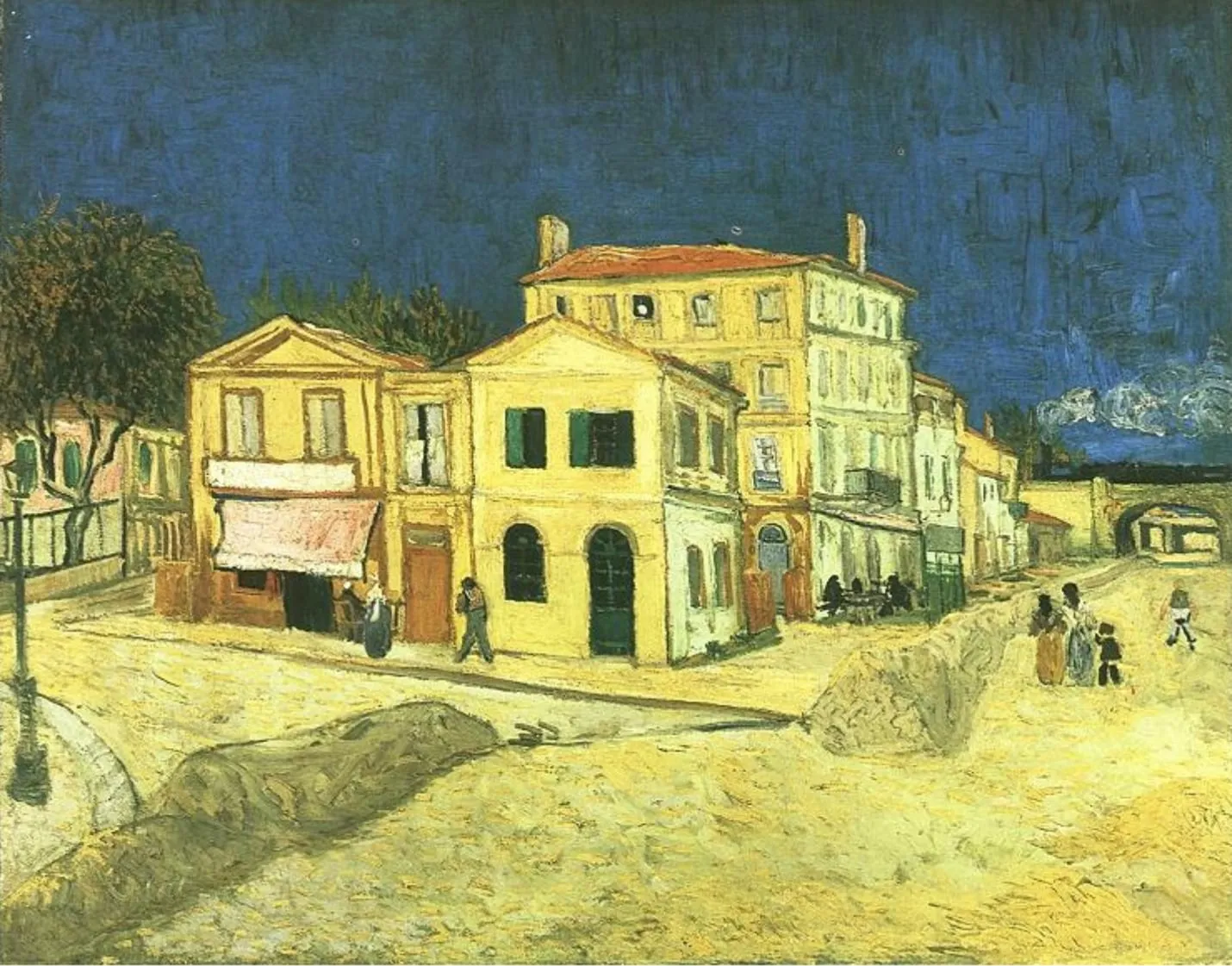
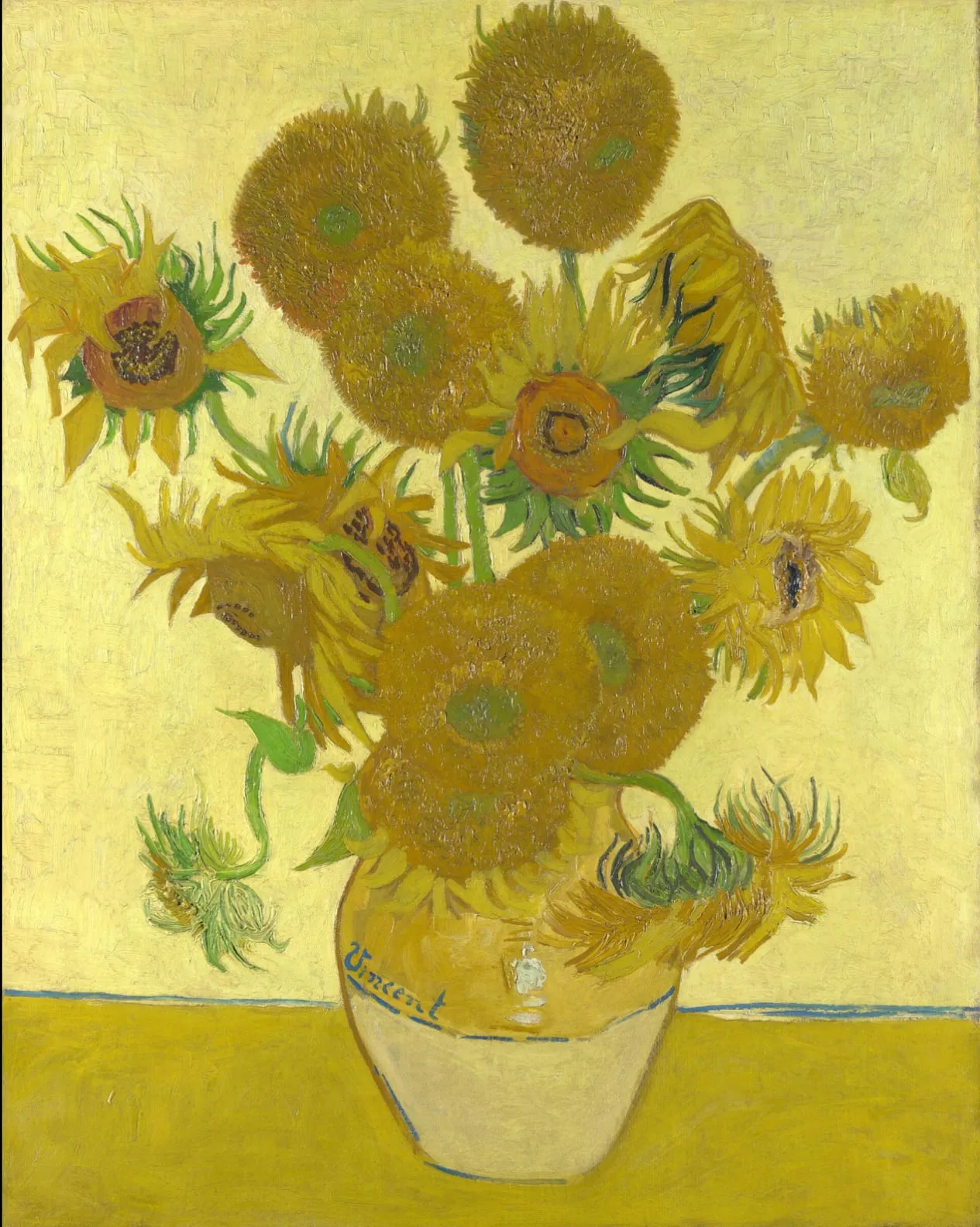
One of the most well-known examples is Vincent van Gogh’s move from Paris to Arles in southern France in 1888. In Paris, Van Gogh absorbed Impressionist techniques and experimented with brighter colors. However, after relocating to Arles, the intense Mediterranean sunlight, open landscapes, and slower rural lifestyle transformed his artistic language. Works such as The Yellow House (see Figure 1)and Sunflowers (See Figure 2)display more saturated colors, expressive brushwork, and emotional intensity than many of his earlier paintings. The brilliant Provençal sunlight intensified Van Gogh’s perception of color and contrast, encouraging increasingly expressive brushwork that departed from Impressionism’s concern with optical realism. In this sense, Arles did not simply supply new landscapes to paint; it transformed the visual language through which Van Gogh interpreted experience.
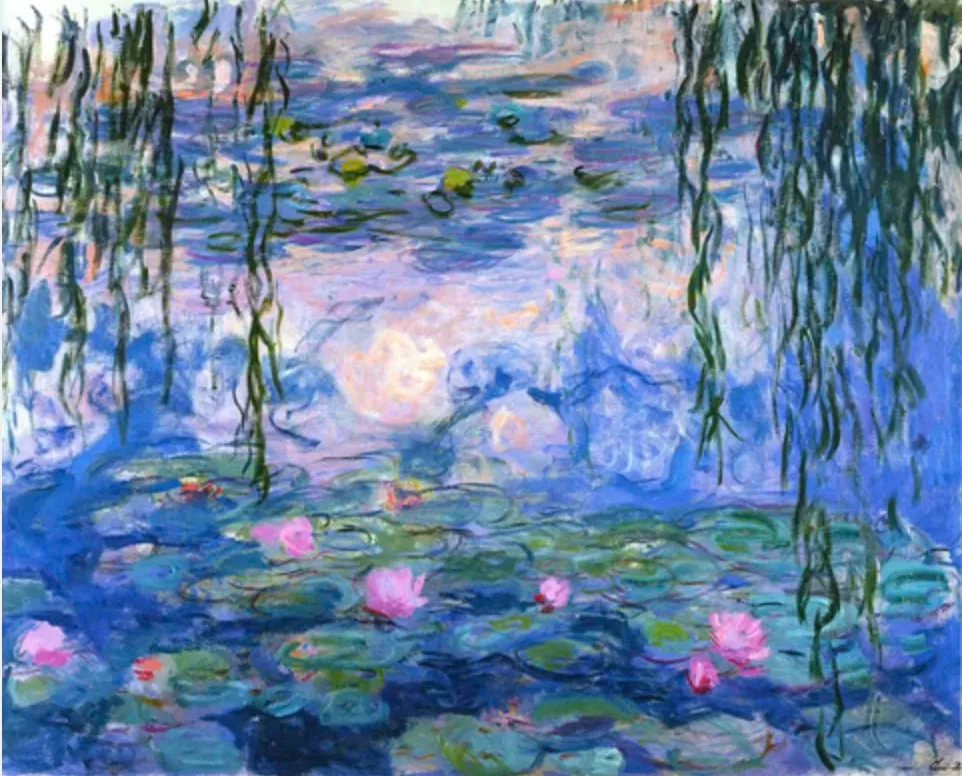
Similarly, Claude Monet repeatedly sought different locations throughout his career to study changing light and atmosphere. His extended stays in places such as Giverny allowed him to develop increasingly experimental approaches toward color and perception. Monet painted the same garden pond at Giverny repeatedly, showing how light, season, weather, and atmosphere changed perception (See figure 3). Rather than documenting landscapes objectively, Monet became interested in how environmental conditions continuously changed visual experience Because light changed from hour to hour and season to season, Monet came to understand landscape not as a stable object but as an ever-changing perceptual experience. His repeated paintings of the same subject demonstrate that environment continually reshaped artistic vision rather than merely providing subject matter.
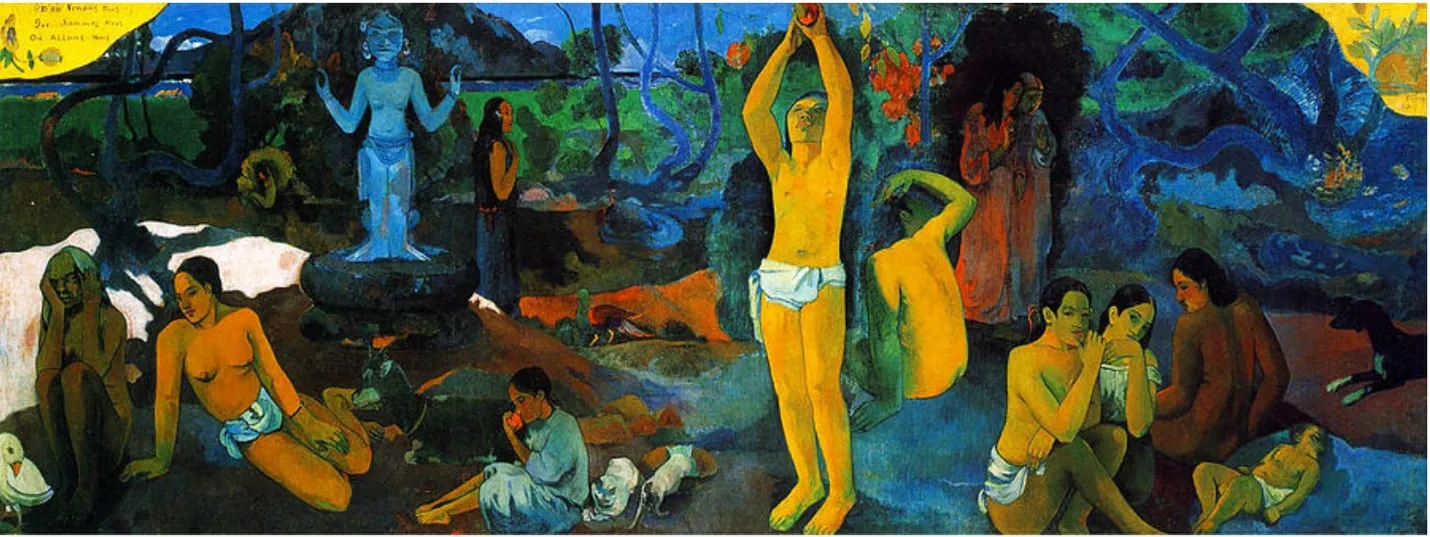
Paul Gauguin presents another important example. Dissatisfied with European society, he relocated first to Brittany and later to Tahiti in pursuit of what he imagined as a more authentic way of life. Although modern scholars rightly critique Gauguin’s colonial gaze and romanticized representation of Polynesia, his artistic transformation nevertheless demonstrates how relocation can fundamentally reshape artistic style, symbolism, and subject matter. His monumental painting Where Do We Come From? What Are We? Where Are We Going? (1897–1898) (See Figure 4) combines Polynesian imagery with symbolic themes of life, death, and spirituality. Rather than merely depicting a new landscape, Gauguin used his experience of Tahiti to develop a radically different visual language, characterized by flattened forms, vibrant colors, and allegorical meaning (Solomon-Godeau, 1989).
Artist Residencies: Using Place as a Method of Artistic Creation
While artists in the past often sought new creative experiences through independent travel, contemporary artist residency programs have institutionalized this practice. Around the world, an increasing number of art organizations now provide artists with dedicated spaces to live and work for periods ranging from several weeks to several months. Programs such as MacDowell in the United States, Künstlerhaus Bethanien in Berlin, and numerous residency programs across Japan and the Nordic countries are all founded on the belief that leaving one’s familiar environment can foster artistic innovation. Unlike ordinary travel, artist residencies require participants to immerse themselves in a new place rather than simply visit it. Artists are encouraged to live within local communities, establish relationships with residents, and engage deeply with the surrounding culture. This extended immersion allows artists to develop new ways of observing and understanding their environment instead of merely collecting visual references or temporary inspiration.
One of the primary benefits of artist residencies is their ability to disrupt habitual patterns of thought. Living in the same environment for an extended period often leads artists to develop fixed routines of observation and working methods. Entering an unfamiliar place interrupts these habits and encourages artists to notice details that might otherwise be overlooked in their everyday lives (Maddux, 2009). Place is never culturally neutral. Every landscape carries histories of migration, power, memory, and belonging. Consequently, artists who relocate do not simply encounter different scenery; they negotiate different cultural identities and systems of meaning. Artistic creation therefore becomes not only an aesthetic process but also an act of cultural interpretation. From a phenomenological perspective, artists do not simply observe space from a distance; they perceive the world through bodily engagement with their surroundings. Changes in place therefore alter not only what artists see but also how they experience the world through movement, sensation, and everyday practice. By confronting unfamiliar surroundings, artists are prompted to question assumptions and approach their creative practice from new perspectives.
Residencies also expose artists to different cultural traditions, systems of knowledge, and modes of artistic expression. Through interactions with local communities, artists may encounter unfamiliar materials, traditional crafts, social issues, and cultural practices that expand the range of possibilities within their own work. These cross-cultural encounters frequently inspire experimentation, allowing artists to incorporate new ideas into their creative processes. Meanwhile, residency programs provide artists with a temporary separation from the demands of their everyday lives. Stepping away from established routines, professional obligations, and existing social networks creates both physical and psychological space for reflection. This period of distance often enables artists to reassess their artistic practice, reconsider long-term creative goals, and explore new directions that may not have emerged within their normal working environments.
The value of an artist residency should not be measured solely by the number of artworks produced during the residency period. Instead, its significance often lies in the transformation of an artist’s methods of working, ways of thinking, and approaches to creative problem-solving. This emphasis on process rather than immediate outcomes explains why artist residency programs have become an increasingly important component of contemporary artistic practice. Psychological research further helps explain why changing environments can stimulate creativity. One key concept is cognitive flexibility, which is the ability to adapt one’s thinking in response to new situations (Scott, 1962). In familiar surroundings, daily activities gradually become habitual: people follow the same routes, interact with the same individuals, and adhere to predictable routines, allowing the brain to rely on automatic patterns of thinking. By contrast, unfamiliar environments require individuals to continuously process new information, adapt to different social norms, and solve unfamiliar problems. This heightened awareness encourages more active observation and flexible thinking, both of which are closely associated with creative performance.
Conclusion
Although new environments often stimulate creativity, it would be misleading to conclude that simply changing one’s location will necessarily result in better artistic work. Many artists have developed remarkable bodies of work while remaining deeply rooted in a single place. For example, the American painter Georgia O’Keeffe spent decades depicting the landscapes of New Mexico, developing a distinctive artistic language through sustained engagement with the same environment. (Robinson, 1989) Her work demonstrates that profound familiarity with a place can be just as creatively productive as encountering unfamiliar ones.
Moreover, relocation may also introduce significant challenges. Financial constraints, cultural differences, language barriers, and feelings of isolation can temporarily hinder rather than enhance artistic practice. Artist residency programs themselves have been criticized for being more accessible to artists with greater economic resources and institutional support, meaning that opportunities for creative mobility are not equally available to everyone.
Therefore, in response to the question “Can a change of place promote artistic development?” the answer is yes. New environments have the potential to reshape artists’ ways of seeing, thinking, and creating by exposing them to unfamiliar experiences and perspectives. However, if the question is “Must an artist change their place of residence in order to become a great artist?” the answer is no. Place is an important catalyst for creativity, but it is not a prerequisite for artistic excellence. Ultimately, the creative value of changing place lies not in geographical movement itself but in the willingness to encounter unfamiliar ways of seeing. Whether artists travel across continents or remain rooted in a single landscape, creativity depends upon their capacity to transform experience into meaning. Place matters because it shapes perception, but artistic greatness emerges from what individuals choose to do with that perception.
References
Bhabha, H. K. (1994). The location of culture. Routledge.
Gombrich, E. H. (1960). Art and illusion: A study in the psychology of pictorial representation. Princeton University Press.
Hou, H. (Ed.). (2015). The artist as nomad. Hatje Cantz.
MacDowell. (n.d.). About MacDowell. https://www.macdowell.org/about
Maddux, W. W., & Galinsky, A. D. (2009). Cultural borders and mental barriers: The relationship between living abroad and creativity. Journal of Personality and Social Psychology, 96(5), 1047–1061. https://doi.org/10.1037/a0014861
Museum of Fine Arts, Boston. (n.d.). Where do we come from? What are we? Where are we going? https://mfaboston6.emuseum.com/objects/32558/where-do-we-come-from-what-are-we-where-are-we-going
National Museum of Western Art. (n.d.). Water Lilies (Nymphéas). https://collection.nmwa.go.jp
Relph, E. (1976). Place and placelessness. Pion.
Res Artis. (2023). About Res Artis. https://resartis.org/about/
Robinson, R. (1989). Georgia O’Keeffe: A life. Clarkson N. Potter.
Scott, W. A. (1962). Cognitive complexity and cognitive flexibility. Sociometry, 25(4), 405–414. https://doi.org/10.2307/2785779
Solomon-Godeau, A. (1989). Going native. Art in America, 77(7), 118–129.
Tuan, Y.-F. (1974). Topophilia: A study of environmental perception, attitudes, and values. Columbia University Press.
Tuan, Y.-F. (1977). Space and place: The perspective of experience. University of Minnesota Press.
Van Gogh Museum. (n.d.). Sunflowers. https://www.vangoghmuseum.nl/en/collection/s0031V
Van Gogh Museum. (n.d.). The Yellow House (The Street). https://www.vangoghmuseum.nl/en/collection/s0032V